
Lawrence County Criminal History Checks
Start with the Lawrence County court index when the goal is to find a local charge, hearing, balance, or disposition. It is free and tied to the clerk's docket. A police report, jail booking, statewide history, and correction record answer different questions. Matching more than one source is especially useful when a name is common or an arrest is recent. Keep the full name, likely year, arresting agency, and any case number close at hand. A date of birth may help an office confirm identity, but the public county form does not advertise it as a search field.
The shortest reliable path moves from local event to official outcome. Use this order:
- Choose Criminal in the Lawrence County court search, then use the case number or full first and last name.
- Open the matching result and compare the court, filing year, charge, status, and balance.
- Ask the arresting agency for its report when the officer's narrative or original charge matters.
- Call the detention center for very recent custody because Lawrence County has no official public web roster.
- Use TORIS for statewide Tennessee history, FOIL for felony correction status, or the clerk for a certified copy.
Each step narrows a different gap. A blank result in one system does not erase a record held in another. Recent booking data may precede a filed case, and a state record can wait for a disposition report from the court.
Search Lawrence County Court Records
The Lawrence County Tennessee Court Information System is the main online starting point. Choose Criminal, not Civil. A known case number is the cleanest key. Name searches also work, and the official help recommends a full first and last name. Search terms compound, quoted phrases are case-insensitive, and longer words receive limited typo tolerance. Results can be sorted and filtered after the search. County directions add one small but useful detail: double-click the name or result row to expose the balance.
The county portal describes itself as an information service, not the clerk's official court record. Its entries may be incomplete or change without notice. Use the Circuit Court Clerk when a pleading, signed judgment, complete docket, certification, or explanation of a missing field is needed. The visible balance also must not be mistaken for the disposition. It shows a financial figure, not whether a charge ended in dismissal, plea, trial, or acquittal.
The official court interface can be seen in the Lawrence County government gateway.

That gateway also separates the court, clerk, sheriff, archives, and other offices that maintain parts of Lawrence County criminal records.
| Portal control | How to use it | Important limit |
|---|---|---|
| Party Name | Enter full first and last name, up to 100 characters | Only the first ten terms count |
| Case Year | Add a four-digit filing year | It is optional |
| Case Number | Use the numeric part after the final hyphen | Do not mix a name with an old reference number |
| Court Type | Select Circuit, General Sessions, or Clerk and Master | Choose a valid court and case-type combination |
| Case Type | Select Criminal | All types are checked by default |
| Cloudflare check | Complete the verification | Find Now remains inactive until completion |
Note: The real-time Filter searches only text already shown in the results and does not use the portal's phrase or typo rules.
Official Background Checks in Tennessee
The Tennessee Bureau of Investigation, Criminal Justice Information Services Division, keeps the state's central fingerprint-supported history. Its public TORIS product is a name-based Tennessee Open Records check. Any requester may order one for $29, but the fee is nonrefundable. TORIS excludes aliases and most juvenile material. It is not the same as a fingerprint comparison, a federal Identity History Summary, or a Lawrence County case search.
TBI-approved fingerprint services run through IdentoGO by IDEMIA for checks authorized by statute. Appointment locations and hours can change, and the research did not confirm a stable enrollment-center address inside Lawrence County. Search the official location tool by the Lawrenceburg ZIP code before traveling. A local police agency may offer an ink card, but availability and fees should be confirmed by phone. For personal federal history, the FBI's EDO channel uses fingerprints and a separate identity and payment process.
TBI's own background-check overview shows the official choices.
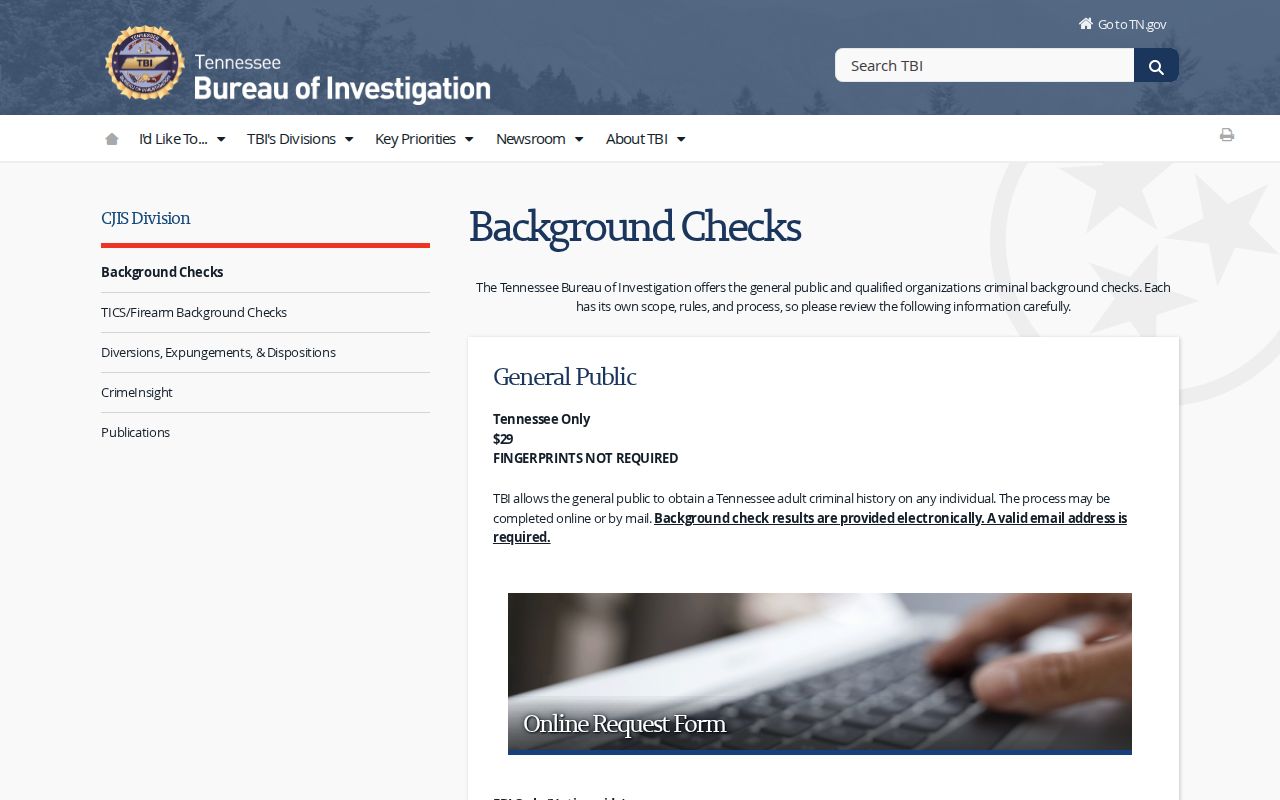
The agency guidance matters when a name search is too narrow or a person needs to review and correct a fingerprint-linked record.
| Official product | Scope | Published fee |
|---|---|---|
| TORIS Open Records check | Tennessee adult, name-based | $29 |
| TBI contractor FBI-only check | Nationwide fingerprint channel | $50 |
| Qualified Tennessee and FBI check | Authorized applicant or volunteer channel | $37.15 applicant; $33.15 volunteer |
| State-only or adoption fingerprint channel | Authorized purpose | $23.90 |
| TBI disputed-record comparison | Fingerprint copy and written request | $24 |
| FBI Identity History Summary | Subject's own nationwide history | $18 base fee; verify before ordering |
TORIS Name Checks Have Limits
TORIS begins with separate paths for credit-card customers and billable accounts. The purchaser form asks for name, address, phone, and confirmed email details. TBI accepts Visa, Mastercard, and Discover. The result is a PDF, and TBI recommends a desktop or laptop because some mobile devices may not display it well. A display problem is not proof of a blank Lawrence County criminal history.
The $29 search does not include aliases. It also is not fingerprint verified. TBI says its repository history consists of misdemeanor and felony arrests that arresting agencies submitted with fingerprints. A citation, an unmatched spelling, or an arrest cycle that was never sent can therefore fall outside the result. Juvenile data is excluded unless the youth was transferred for adult prosecution under Tennessee law.
The official TORIS landing screen shows the paid entry point for a statewide Lawrence County criminal record review.
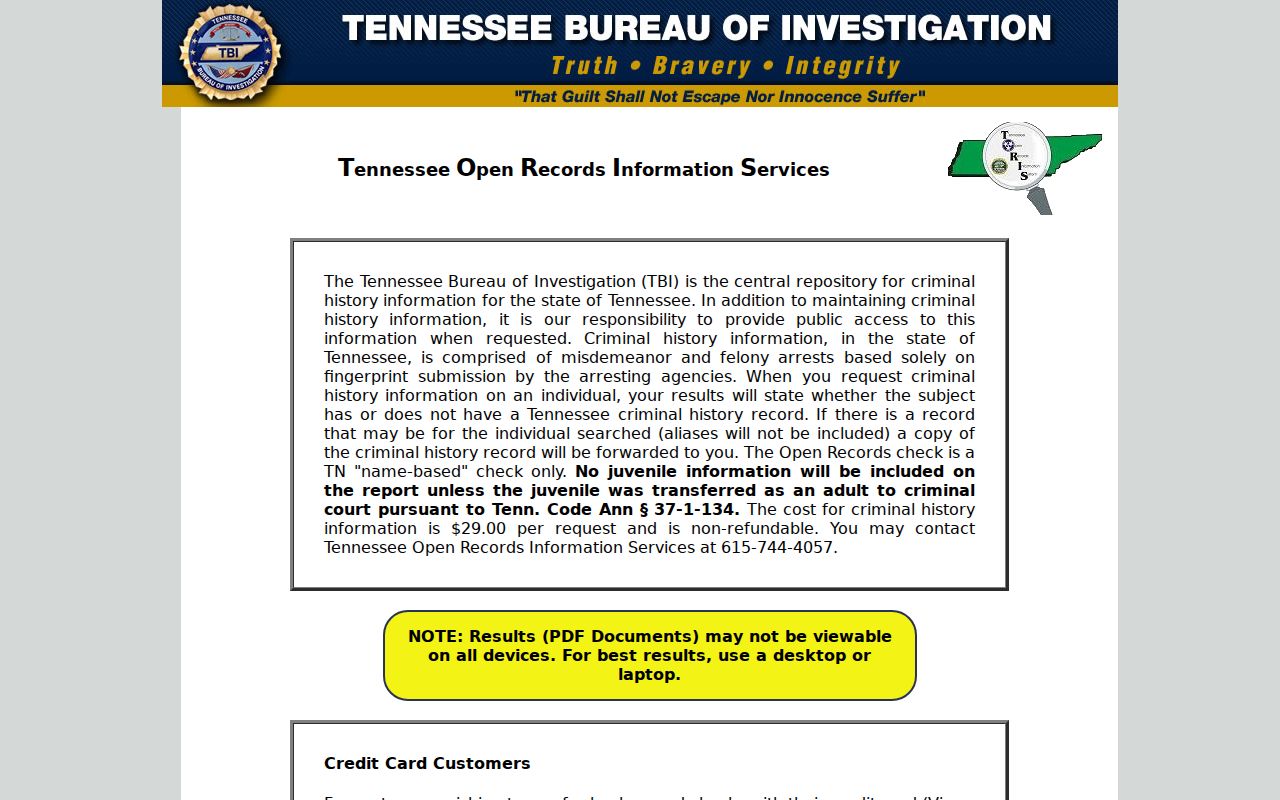
A county docket should still be checked for the filed charge and outcome, since a repository entry can lack a late or unreported disposition.
Kinds of Criminal Records
No single Lawrence County criminal record contains the whole story. The officer creates an incident or arrest report. Jail staff create booking and custody data. The prosecutor chooses what to file, and the clerk records each court event and outcome. TBI links fingerprint-supported arrest cycles to dispositions reported by courts. TDOC and the Tennessee Board of Parole add the felony custody and supervision layers.
- Incident report: the agency narrative, place, time, people, and evidence, with lawful redactions.
- Booking record: intake time, photograph, fingerprints, asserted charge, bond, and custody data.
- Court case file: charging paper, appearances, motions, orders, judgment, sentence, and ledger.
- TBI history: fingerprint-supported Tennessee arrest cycles and the dispositions reported back to TBI.
- Warrant or capias: court process directing arrest, which may be limited when sealed or juvenile.
- Correction or registry record: felony supervision, custody, release, or statutory registration information.
Those divisions protect against a common mistake. A police charge is not automatically the prosecutor's charge, and neither proves the final result. For deeper court detail, use the Lawrence County court case lookup. Recent custody and arrest channels are collected in the arrest search.
Lawrence County Records on Gaines Street
Lawrenceburg's courthouse block is compact, but its records are divided. The Lawrence County Courthouse at 200 West Gaines Street holds General Sessions, Circuit, Juvenile, and Chancery proceedings. The Circuit Court Clerk works at 240 W. Gaines Street, NBU #12, and manages the dockets for Circuit, General Sessions, and Juvenile divisions. The clerk's counter is open Monday through Friday from 8:00 a.m. to 4:30 p.m.; call 931-762-4398.
The Lawrence County Detention Center also sits at 240 W. Gaines, just behind or adjoining the courthouse. Booking can be reached at 931-762-3646. Across the same downtown area, Lawrenceburg Police and City Court share 233 W. Gaines. City police reports and municipal tickets remain city records even when a person is later booked at the county jail. Physical closeness does not merge custody, police, and court files.
These Lawrence County criminal record holders have different roles:
Circuit Court Clerk
240 W. Gaines St., NBU #12
Lawrenceburg, TN 38464
931-762-4398
Weekdays, 8:00 a.m.-4:30 p.m.
Detention Center
240 W. Gaines St.
Lawrenceburg, TN 38464
931-762-3646
Call for current booking confirmation.
Lawrenceburg Police
233 W. Gaines St.
Lawrenceburg, TN 38464
931-762-2276
Nonemergency dispatch: 931-762-0450.
Older files have another home. Lawrence County Archives at 2588 Highway 43 South in Leoma generally holds permanent county records from 1818 through the mid-1990s. Its published fees are $0.15 per paper page, $1 for certification, and exact postage. Many scans can be emailed without charge.
Lawrence County Criminal Records: What They Contain
The available fields depend on the custodian. A TBI cycle can contain identity descriptors, the arresting agency, arrest date, charge, and any disposition reported by the court. The county docket may be richer for a local prosecution, with the case number, court division, filed charge, settings, status, outcome, and financial balance. FOIL can add a photograph, TDOC status, location, offense, sentence, parole hearing, and release information for a person in the felony correction system.
| Name and identifiers | Legal name, aliases where that product includes them, physical descriptors, and agency identifiers. |
|---|---|
| Arrest and booking | Date, place, arresting agency, intake number, original charge, bond, and custody or release data. |
| Case and charge | Case number, court, filed offense, statute, scheduled events, motions, and orders where public. |
| Disposition | Dismissal, plea, trial result, judgment, or another final court action reported in the file. |
| Sentence | Confinement, probation, financial terms, and other terms shown in the judgment or TDOC record. |
| Supervision | Current or former felony incarceration, probation, parole, location, and release details in FOIL. |
A name alone is weak proof of identity. Compare the court, case year, agency, and other lawful details. Do not treat an arrest entry as proof of guilt or a booking photograph as proof of current custody.
No Lawrence County Booking Roster
No official searchable Lawrence County jail roster was found in the county navigation. That is a documented access limit, not a reason to use a commercial mugshot gallery. Call the detention center for present county custody, search the court docket for the filed case, and use VINE for supported custody notifications. These channels may update on different schedules. A booking can exist before the clerk receives a charging document.
FOIL begins at another layer. It covers people currently or formerly in TDOC felony custody or supervision. It is not a list of every Lawrence County arrest or county misdemeanor. Search by name, TDOC ID, or State ID; the name route can include aliases. Results can show status as incarcerated, probation, parole, or inactive. The MyTN app offers the same state service, but it is not a county booking app.
The official Tennessee fingerprint location service illustrates a separate identity-check channel.

Fingerprints support authorized identity checks, while the Lawrence County jail phone and docket answer current local custody and court questions.
Note: State reports use different bed counts for the detention center, so call the facility instead of assuming a published capacity equals current occupancy.
Tennessee Public Access Laws
The Tennessee Public Records Act, T.C.A. §10-7-501 et seq., generally permits Tennessee citizens to inspect state, county, and municipal public records during business hours unless another law protects the material. A request should describe a record that the office keeps. It should not ask staff to perform legal research. Inspection is not always conditioned on a written form, though an office can require a written request for copies.
Lawrenceburg's adopted policy gives a concrete local example. Inspection requests may be oral or written. A request for copies or for both inspection and copies uses Form A and proof of Tennessee citizenship. When prompt production is not practical, the custodian has seven business days to issue Form B with a reason, denial, or estimate. That is a response mechanism, not a promise that every file will be produced within seven days.
Key Tennessee rules:
T.C.A. §10-7-503 gives qualified public access and requires covered government offices to adopt request policies.
T.C.A. §10-7-504 protects listed confidential records and sensitive personal information.
T.C.A. §37-1-153 generally restricts juvenile court and law-enforcement records, subject to exceptions.
T.C.A. §40-32-101 controls many Tennessee expungement routes and qualifying outcomes.
Active investigative facts, juvenile material, medical information, victim-protected facts, identifiers, and security-sensitive content may be withheld or redacted. Ask the custodian for the public portion instead of assuming the full file is open.
Fix Lawrence County Record Gaps
A TBI record can show an arrest without the final Lawrence County court outcome when disposition reporting is late, missing, or attached incorrectly. First obtain the TORIS record and identify the exact arrest cycle. Then search the county docket and ask the Circuit Court Clerk for a certified disposition. Compare the agency, date, charge, case number, and final order. The originating court or arresting agency may have to transmit corrected data before the state repository changes.
TBI's formal disputed-record route requires a fingerprint copy, a letter requesting fingerprint comparison, and a $24 cashier's check or money order. The Biometrics Services Unit reports whether the record was correctly associated and can assist with correction. This process differs from asking the clerk to correct its own docket. It also differs from expungement, which removes eligible public records through a court order rather than merely fixing an error.
The FBI's official electronic identity-history portal serves personal review of nationwide fingerprint history.
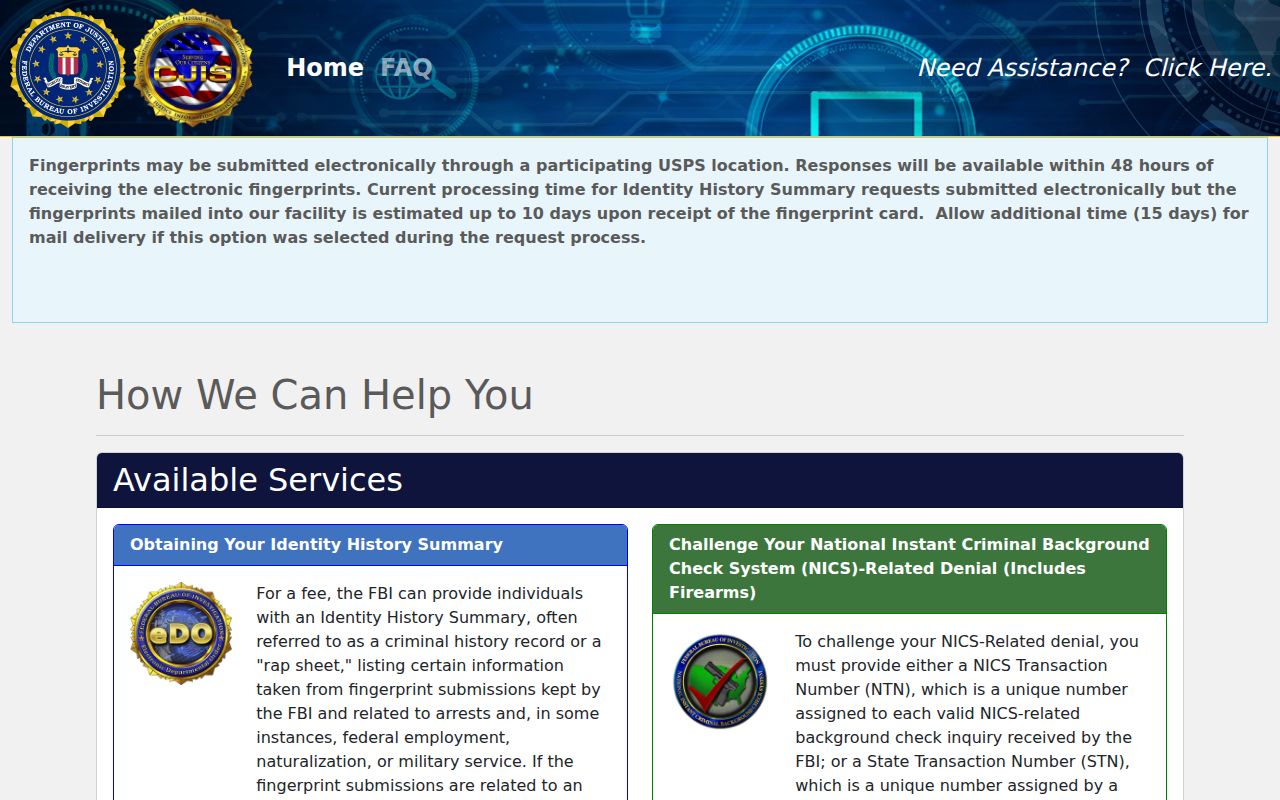
A federal self-record request does not replace the Lawrence County clerk's certified outcome or TBI's correction work on a Tennessee cycle.
Restricted, Sealed & Expunged Records
T.C.A. §40-32-101 is Tennessee's central expungement law. Certain non-conviction results, such as dismissal, no true bill, not guilty, or arrest without charge, can support removal of public records under current procedures. Conviction relief is narrower. It depends on the exact offense, statutory subsection, sentence completion, waiting period, and other conditions. The offense class alone cannot establish eligibility.
Begin with the Lawrence County case number and disposition. Ask the Circuit Court Clerk which current petition or order applies and what fee, if any, is due. The research did not locate an official local filing fee, so no amount should be assumed. File in the court that had jurisdiction, obtain the required prosecutor and judge action, and later verify both the county index and TBI history.
The Tennessee order form includes separate choices for qualifying conviction, pardon, human-trafficking, and no-final-disposition grounds. It also warns that limited confidential information can remain after public records are destroyed. Juvenile files have their own access rules. Registry removal is separate from ordinary expungement and requires its own statutory basis and documentation.
- Expungement or expunction
- Court-ordered removal of eligible public criminal records under Tennessee law.
- Disposition
- The court's result, such as dismissal, plea, acquittal, or judgment.
- No true bill
- A grand jury's decision not to return the proposed indictment.
- Judicial diversion
- A statutory path that can defer judgment and may lead to expungement after successful completion.
Lawrence County Warrant Fallbacks
Lawrence County does not publish an official active-warrant web search. Begin with the issuing system. A county criminal case may show a public capias or failure-to-appear event in the clerk's docket. Call the Circuit or General Sessions Clerk at 931-762-4398 for a visible filed entry. The sheriff handles service of county process, while Lawrenceburg City Court handles its own ticket and ordinance failures to appear at 233 W. Gaines.
A warrant is not one uniform record. An arrest warrant directs custody based on probable cause. A bench warrant or capias often follows a missed appearance or failure to obey an order. A search warrant authorizes a search and can remain sealed. Juvenile and sealed process may be unavailable. A municipal warrant also may not appear in the county index. Only the issuing court can clear its process.
If a warrant may be active, do not visit an office expecting immunity from arrest. A lawyer or scheduled court appearance may be the safer path to learn whether resolution requires a motion, payment, bond, or appearance. After action is taken, confirm the update with both the issuing clerk and serving agency because their systems may not change at the same time.
Lawrence County Supervision Records
Felony probation and parole in Lawrence County are supervised by the Tennessee Department of Correction. Probation is a court-ordered community sentence. Parole is community release granted by the Tennessee Board of Parole before the full term ends. The county case file supplies the order and later violation filings, while FOIL may show current or former felony supervision status. It cannot prove every misdemeanor probation status.
The District 51 Lawrenceburg field office serves Giles, Lawrence, and Wayne Counties from 1004 Buffalo Road, Lawrenceburg, TN 38464. Its phone is 931-766-1420. Use it for supervision logistics, not as a general public roster. Board records and FOIL may help with parole hearing or release context, and VINE can provide supported custody-change alerts.
The official TDOC release definitions distinguish probation, parole, determinate release, and community corrections.
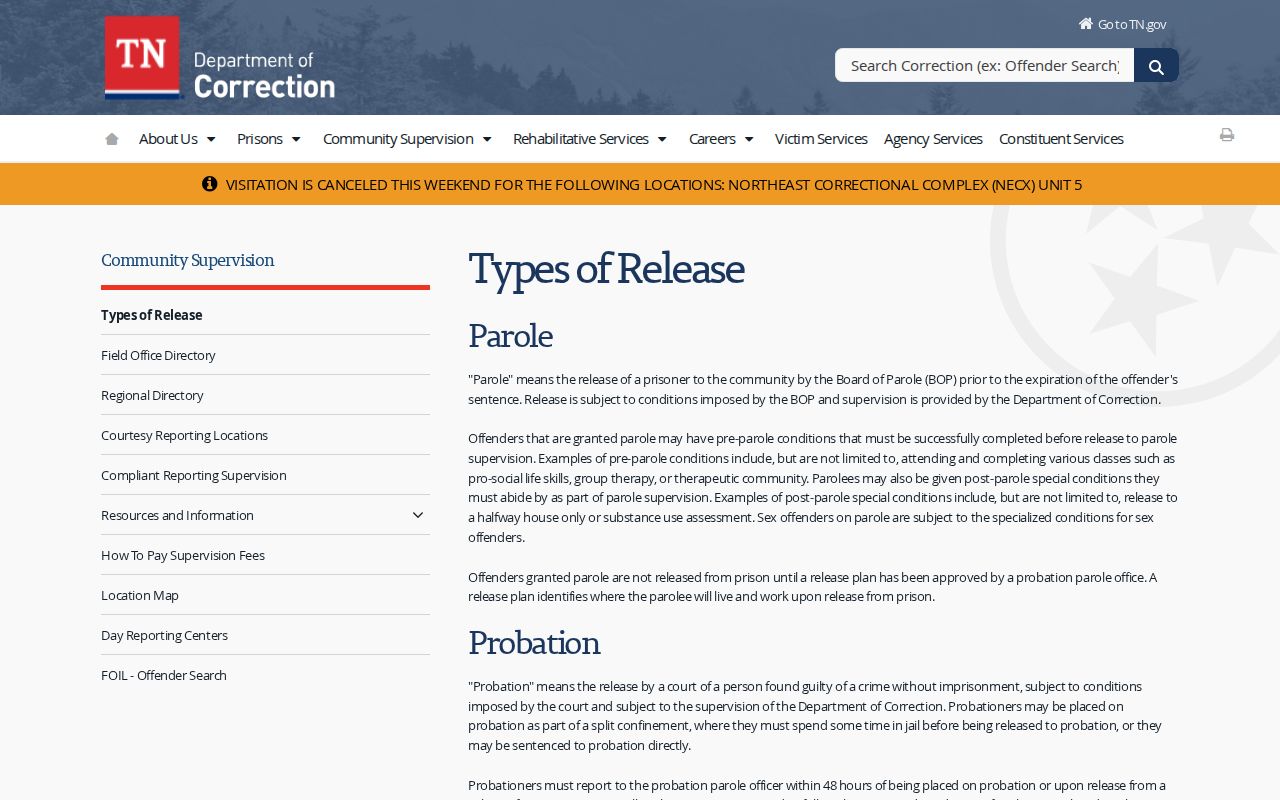
Those definitions help a reader connect the sentence in a Lawrence County judgment with the status shown later in FOIL.
The Tennessee Board of Parole is the decision authority for parole.
TDOC supervises the person after release, so the Board record and correction status describe related but distinct parts of the process.
City-by-City Criminal Records in Lawrence County
Lawrenceburg, Loretto, and St. Joseph are the county's three largest incorporated cities in the official 2025 municipal series. Each police department keeps the reports it creates. Municipal ticket and ordinance files remain with the relevant city clerk or court, while state criminal charges move into Lawrence County General Sessions or Circuit Court. A city arrest can also create a booking at the county detention center and a later fingerprint-supported TBI cycle.
Start locally when the event happened inside city limits. Lawrenceburg offers the most detailed published route, including its police counter, Public Records Request Coordinator, and Form A policy. Loretto directs requests through City Hall and its Police Chief or Court Clerk contacts. St. Joseph has no public municipal docket portal and publishes two different official address references for City Hall and the police department, so callers should confirm the destination before traveling.
Lawrenceburg Record Check
11,633 certified 2025 population · Police reports and City Court share the West Gaines complex.
Loretto Record Check
1,739 certified 2025 population · City Hall houses police and municipal record contacts.
St. Joseph Record Check
790 certified 2025 population · Confirm the Tennessee agency before crossing into an Alabama search.
Unincorporated communities begin with the Lawrence County Sheriff's Department for the source report. The location of an arrest, the agency named in the file, and the court that received charges determine the right custodian more reliably than a mailing address alone.